
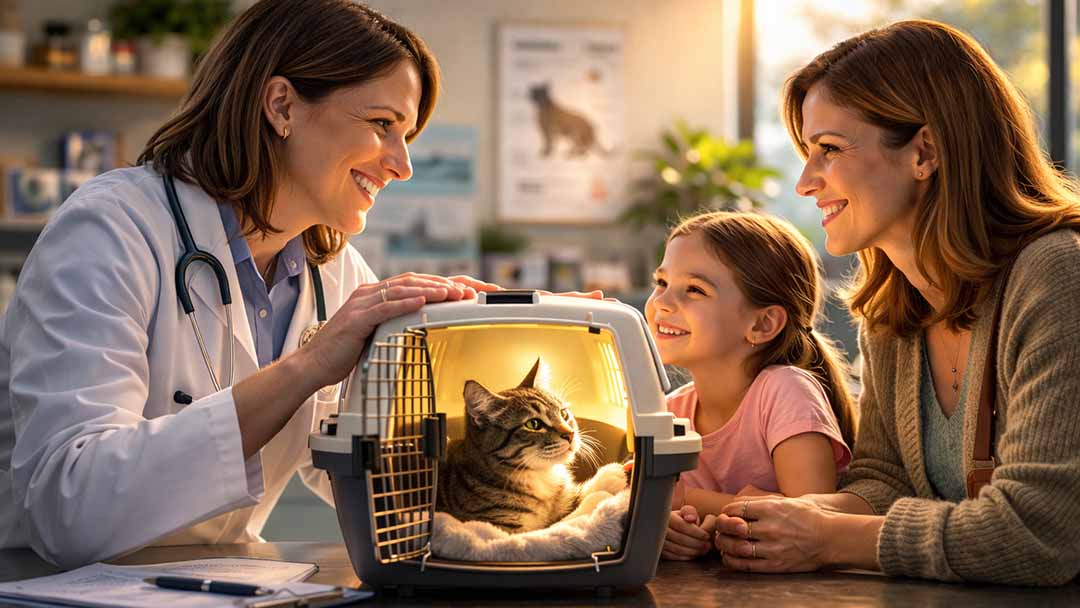
We get one first impression, one chance to convey credibility and compassion to hard-won new clients. Here’s how you do it.
As a business advisor, I have observed hundreds of client exchanges in the exam room. My sense is that we often miss fundamental elements of service because we are too focused on the service system. That is, our attention to patient chart management, charge capture, invoicing, and the protocols we need to pass information onto the rest of the care team overshadows the equally important need for training in client connection.
The Power of First Impressions
People make nearly instantaneous decisions about whether they trust you, indeed whether or not they like you. Some of the traits that make an instant impression on us are:
- Grooming
- Facial expressions
- Attentiveness
- Posture
- Hygiene
- Responsiveness
A negative impression in any of these areas immediately compromises your chances of building rapport and gaining trust. Moreover, one bad impression early on in the cycle of service negatively taints every subsequent team member interaction.
First impressions are so important that there are three things every veterinary professional should do before interacting with a client:
- Know the deal: Don’t walk into a client encounter blind. Minimally, know their name, their pet’s name, and what they want. Stepping into a client interaction prepared signals that you can be trusted with the client’s business; that you have already been thoughtful about their needs, and are eager to help.
- Stop what you are doing and greet the client: Don’t meet a client while typing up your notes, tying your shoe, washing your hands, or stooping down to do a double time greeting to Fido. Stop what you are doing, make eye contact, smile, and extend a hand or word of greeting.
- Address the client’s needs before your own: Begin a dialogue by asking how the client is doing. “How was the trip over? Did you find us okay? I hope we haven’t kept you waiting too long.” Or, if you need to review a treatment plan, check in with the client’s concerns first, “I would like to review the treatment plan for Kitty Kat, but before I do, do you want to see him? How are you holding up? You’ve been through a lot.” If you have questions that need answering or if you need forms signed, explain their value to the client: “I want to go over some forms with you. They’ll help you to fully understand how we want to help Kitty Kat today.” Or, “This paper ensures that Kitty’s medical record is accurate and reduces the chances that there will be any communication errors. Can you please take a moment and verify this information for me?”
Listen Without Multitasking
You think you can type notes into the computer and listen at the same time. I would argue that you can’t, but we’ll save that debate for another day. Let’s instead zoom out and reflect back on what your typing looks like to the client.
When you visit your human doctor, which seat does she take? The one in front of you or the one in front of the computer? She types while you talk. You like it? Does it signal caring? Does it really look like she’s catching the nuance of what it is you are talking about? This may be your second or third time back to the doctor to resolve an issue. You believe that the details of what you are explaining are important. With all of the typing that she is doing, does it look like she believes they are important?
Multi-tasking is a great example of trying to serve two masters at once with both ending up shorted. When interacting with a client, listen. Following the exchange, write down any necessary notes. Focusing solely on the client exchange improves your comprehension and retention of the interaction. Notes are then easier to write and better serve to reinforce your own memory of what occurred.
Ask Open-ended Questions:
One thing all of us can do to improve is to practice open-ended questions. As a refresher, an open-ended question is a query designed to solicit a detailed response, not a simple yes or no.
The subtle dangers of a closed-ended question can be demonstrated by this exchange:
Vet nurse: “Do you brush your dog’s teeth?”
Client: “No.”
What’s going on here is more than just brevity. Everyone knows that the answer, “No”, to the question, “Do you brush your dog’s teeth?”, is the wrong answer. Immediately the care provider has subtly set up an exchange where the client is on the back foot, feeling not only in the wrong, but even defensive and closed off.
Open-ended questions, on the other hand, are an invitation for the pet owner to elaborate on his or her favorite topic: What life is like with me and my dog? In this context, clients get a chance to tell stories of how the dog and pet owner share their lives. Inside open-ended questions, we can learn about teeth brushing, but in a way that doesn’t feel judgy. They can also be an avenue by which vet professionals and clients share enjoyable stories about the animals in their lives, bond, and build camaraderie.
Stop Thinking That More Client Education = Better Service
Education, in the absence of relationship and context, comes off as impersonal and ‘sell-y’. Worse, everyone in the room tends to disengage when the time comes to ‘educate’ the client on routine topics like flea prevention or early disease detection. These spiels have been delivered and heard so frequently, they come off as canned. There is a place for client education inside the four walls of your exam rooms, but it’s more important to build a relationship first through active listening, curiosity, and empathy.
Listen for Chances to Recommend the Hospital’s Services
When I started leading, I built questions for team members to ask during the history-taking part of the exam. The list was designed to get a thorough background on the patient’s health and presenting complaint, as well as to look for opportunities to upsell products and services. It’s a shameful admission, but one that is embarrassingly true. The questions were, in a way, an attempt to lead the witness. “One-in-four dogs test positive for a tick-borne illness. Do you protect your pet against ticks?”
Since then, I’ve learned a better way to both enjoy my time with the client and to look for ways to build my business. It’s predicated on inviting the client to talk about her relationship with her pet, the pet’s place in the family, his lifestyle, and his likes and dislikes. The questions serve as a jumping off point for us to relate to one another, to grow our relationship as fellow pet owners, and as a way to look for opportunities to recommend our services. In the end, the difference between the two approaches may seem subtle, but the results are appreciably different. The first approach feels clinical, whereas the second approach is more conversational and, I would emphasize, genuine and more enjoyable.
Make a Strong Recommendation
Once you have gathered enough information on the pet, the family, and their lifestyle, there is no need to go into elaborate options, at least not yet. Provided you have asked questions about the client’s concerns and pet healthcare goals, and examined the patient, you should have an idea of what you think is best. You should plainly state that idea by saying something like, “Taking into consideration everything you have discussed with me including your concerns about cost, I recommend that we…” And then wait.
Clients may need time to think. You may see them turning your recommendations over in their mind. Give them a bit of space to do this. Don’t muddy the waters by immediately jumping in with, “But there are other options,” or “Does that sound okay?” Don’t let the silence unnerve you. Be okay with the quiet. Sit into the time by returning your focus to the pet. Eventually you may ask, “Do you have any questions?” Or if their face is truly inscrutable, you may say, “Tell me more about what you are thinking. I want to be of help.”
Listen to the client’s questions. Explain your reasoning with science-based information and personal stories from your career or your own life as a pet owner. The former shows your expertise; the latter shows your empathy. Combinations of science-based education and personal stories reflect the duality of what shapes your interest in veterinary science: healthcare and humaneness.
Provided that you have laid a foundation of trust, telling people what you think is not pushy or money hungry. It’s a sign that you are invested and care enough to speak your mind.
Investigate pushback
If the client is confused or uninterested in your suggestion, she’ll telegraph it with her body language. She’ll look down, cut you off with a perfunctory, ‘Okay’, or appear to shut down. At that point, if you are especially eager to help, you can ask the client for more information: “How do you feel about my recommendation? Do you want to know more about my line of thinking?”
Some team members may feel this extra push for client compliance is too strong, but here is my thought: If you have made a strong recommendation for a service that can be dismissed without any additional discussion, how valuable was the recommendation to begin with? From the client’s perspective, not making an attempt to better explain yourself may leave her feeling like you weren’t serious about the offer to begin with and were, ‘just trying to make more money’.
Taking a step toward pushback requires an investment in the outcome of the patient and pet owner before you. It may appear pushy to the client, but only if you are not truly intent on helping. Provided your insistence comes from a place of caring, any subsequent dialogue that you are able to wrest from the client will likely result in improved understanding between the two of you and a better resolution for everyone involved.
Use Stories
When educating a client about the value of a service, consider telling a story of how the service worked to improve the life of another client or patient. In general, veterinary education demonstrates your knowledge about outcomes. Stories, on the other hand, reflect your feelings about them. They show the human behind the doctor.
Tell the Patient’s Story
Parallel to the above point is how we educate a client about a treatment plan.
Most vet professionals go straight to the treatment plan when educating clients about services and read it aloud, line by line. This isn’t education, it’s an audit. My sense is that hospital teams are attempting to be as transparent as they can about pricing, but in their attempt to explain every charge, they end up sounding as though money is the only thing that matters, especially when, as so often is the case, the employee never mentions the pet’s name or wellbeing during the exchange.
When reviewing a treatment plan with a client, tell the story of the pet’s care. Explain the services as a journey of treating the patient’s emotions, safety, pain, and physical wellbeing. So, instead of reading the treatment plan as a list of invoice items:
- Catheter, 25 dollars
- Medical waste fee, 6 dollars
- Anesthesia charge, 140 dollars low end, 270 dollars high, etc.
Try this:
“Our goal is to make Rye’s procedure as safe and as comfortable as possible. From the moment she enters the hospital, we’re paying attention to her safety and how she feels. To that end, we place a catheter. This procedure is fast, nearly pain-free, and provides us the ability to give her something to mellow out her anxiety. It’s also the ideal safety measure because we can use it to immediately deliver any additional medications she may need…”
In general, when conveying a treatment plan the arc of the story should be:
- This treatment plan is designed to remedy Rye’s medical issues affordably and safely.
- We are going to treat her medically, but we are also going to treat her emotionally by paying attention to her anxiety and pain.
- We have a series of services that will stabilize her.
- We have additional services that ensure she remains calm and safely cared for throughout her treatment and after she goes home.
- Lastly, we have a plan in place to keep communication open between us while she is in the hospital with us and to ensure that you can visit Rye and let her know that you are still here for her.
Be Consistent
One sure way to undermine client trust is to have a team divided on what they believe is or is not necessary for optimal care. If you have one doctor that believes in pre-surgical bloodwork, but another that does not, you risk alienating the one with the safer approach to patient care. Just as bad, you instill in the client the sense that there are some team members that make superfluous recommendations. In cases like these, you risk the loyalty of your client base, the financial soundness of your business, and the enjoyment that some of your team members get from their work.
To ensure that everyone is making consistent recommendations, hold a standard-of-care meeting during which all doctors agree to the same approach to patient wellness. From there, branch off to commonly treated illnesses/conditions like diarrhea, vomiting, dental disease, skin masses, upper respiratory infections, and so forth. Once these standards have been agreed upon by doctors, promulgate them to the rest of the team.
Too many practices fear a standard of care meeting, worrying that it will end contentiously. Don’t fear it. I have led many standard-of-care meetings in my career. Almost all doctors find them helpful. Support staff are ecstatic to be working for one hospital instead of a suite of different doctors and their specific approaches to routine patient care.
Conclusion
As veterinary medicine has grown more complex, so has the workflow to manage patients and clients, too often at the cost of demonstrating our compassion and credibility.
Today, we have all kinds of ways to gather client and patient information and help us to manage the cycle of service. What we still don’t have is a machine with the ability to kindle real-life trust and bonding with our clients. That’s where you come in.
Pursuing compassion and credibility in the client exchange isn’t about higher revenue, though certainly, that will be an outcome. Rather, it’s about better medicine and a better, quality work life for all those that choose to look up from the work of patient management to pay closer attention to client connection.